Revue d’Histoire Contemporaine de l’Afrique (RHCA) est une revue open access d’histoire de l’Afrique à comité de lecture. La revue publie deux numéros thématiques par an et propose différentes rubriques : articles varias, comptes rendus de lecture, entretiens, et sources, terrains & contextes.
Archives
-

Opening Up Morocco: A History of Mobility to and from Modern Morocco (19th–21st Centuries)
No. 10 (2026)Special issue edited by Benjamin Badier (Université Bretagne-Sud), Yazid Benhadda (MECAM, Université de Tunis), Abdelmounaïm Fanidi (École des hautes études en sciences sociales), Othmane Mouyyah (Université Libre de Bruxelles), Soufiane Taïf (Université Paris 1 Panthéon-Sorbonne).
Editorial coordination within RHCA by Anaïs Angelo and Camille Evrard.
Morocco is still all too often considered a country unto itself, one that has managed to develop a distinctive identity by protecting itself from the outside world. This cliché of isolation, perpetuated by colonial and nationalist interpretations, continues to have a significant impact on the historiography of modern Morocco. This historiography is characterised by a certain isolation and is far removed from recent reflections on methodology within the discipline. This special issue aims to contribute to opening up Morocco's modern history by treating it as an open field of research. It brings together studies from Morocco and elsewhere that examine the various incoming and outgoing flows connecting the country to the rest of the world between the 19th and 21st centuries. Without exaggerating the importance of these connections, the articles question the primacy of the national framework as a scale of analysis. They demonstrate how people, ideas, and objects adapt to constraints, whether geographical, political, colonial, postcolonial, economic, or cultural, and how these exchanges contribute to the development of modern Morocco.
Image: An 18th-century Moroccan embroidery from the Azemmour region, whose stylistic motifs are very similar to those found in embroideries from Assisi (Italy) and Spain. Band (Morocco); linen and silk; H x W: 187 x 24 cm (6 ft. 1 5/8 in. x 9 7/16 in.); 1954-108-1. Collection Cooper Hewitt.
-
Ongoing Publications
Here, you will find papers published in the journal's sections: Miscellanea, Critical reviews, Sources, fields & contexts, and Interviews since 2025.
-

Children and Childhoods in African History
No. 9 (2025)Special issue edited by Kelly Duke Bryant (Rowan Unversity) and Kalala Ngalamulume (Bryn Mawr College).
Editorial coordination within RHCA by Karine Ramondy, in collaboration with Lydia Hadj-Ahmed.
It is well known that Africa is the youngest continent in the world today, with 70% of its population under the age of thirty according to 2024 statistics. Youth are often seen as vectors of change in African societies. But historical scholarship on childhood and youth in Africa remains underdeveloped compared to the scholarship on childhood and youth on other continents. This special issue responds to this gap, bringing together work from several historians of childhood in Africa that highlights the problems, constraints, and possibilities African children have encountered from within their own communities, from missions, or from the state. Concentrating on the period from the nineteenth century to the present, these articles suggest that we must examine how the meanings of the word “child” have changed over time and across different African societies.
Image: Archives du Palais Royal, Inventory 122, 97/A, "Album contenant 35 photos de l'école pour filles 'indigènes'", Élisabethville, 1925 (Inventory of King Leopold III's photo album collection).
-

Varia
No. 8 (2025)This issue gathers papers published in the journal's sections: Miscellanea, Critical reviews, Sources, fields & contexts, and Interviews between 2021 and 2024.
Cover: Literacy notebook, 'Lutar, Aprender, Vencer, Trabalhar,' PAIGC, Direction politique de l’alphabétisation, 1977, p. 18-19. We thank João José Silva Monteiro, also known as 'Huco', who authorised these images to be used and reproduced for university research purposes.
-

Workers' Union Involvement in Africa (20th Century)
No. 6-7 (2024)Double special issue edited by Françoise Blum (CHS, Paris), Ophélie Rillon (Imaf, Paris) and Elena Vezzadini (Imaf, Paris).
Editorial coordination within RHCA by Anaïs Angelo and Romain Tiquet.
This double issue of the Revue d'histoire contemporaine de l'Afrique looks at ordinary trade unionism in twentieth-century Africa. It calls for documenting routine life in trade union organisations—beyond the paroxysmal moments of struggle—for questioning the power relations that shape organisations and international cooperation internally, and for analysing the way in which trade union memories and legacies are passed on (or not) as history unfolds. By focusing on social relations in the world of work and ordinary activism, the aim is to reflect on the possibilities and constraints when writing trade union history, with a twofold ambition: to write a history of everyday trade unionism that is attentive to social gender, race, class and generation relations; and to write a transnational history of trade union solidarity across imperial borders.
Cover photograph: Photographic collection of the SNEA-B.
-
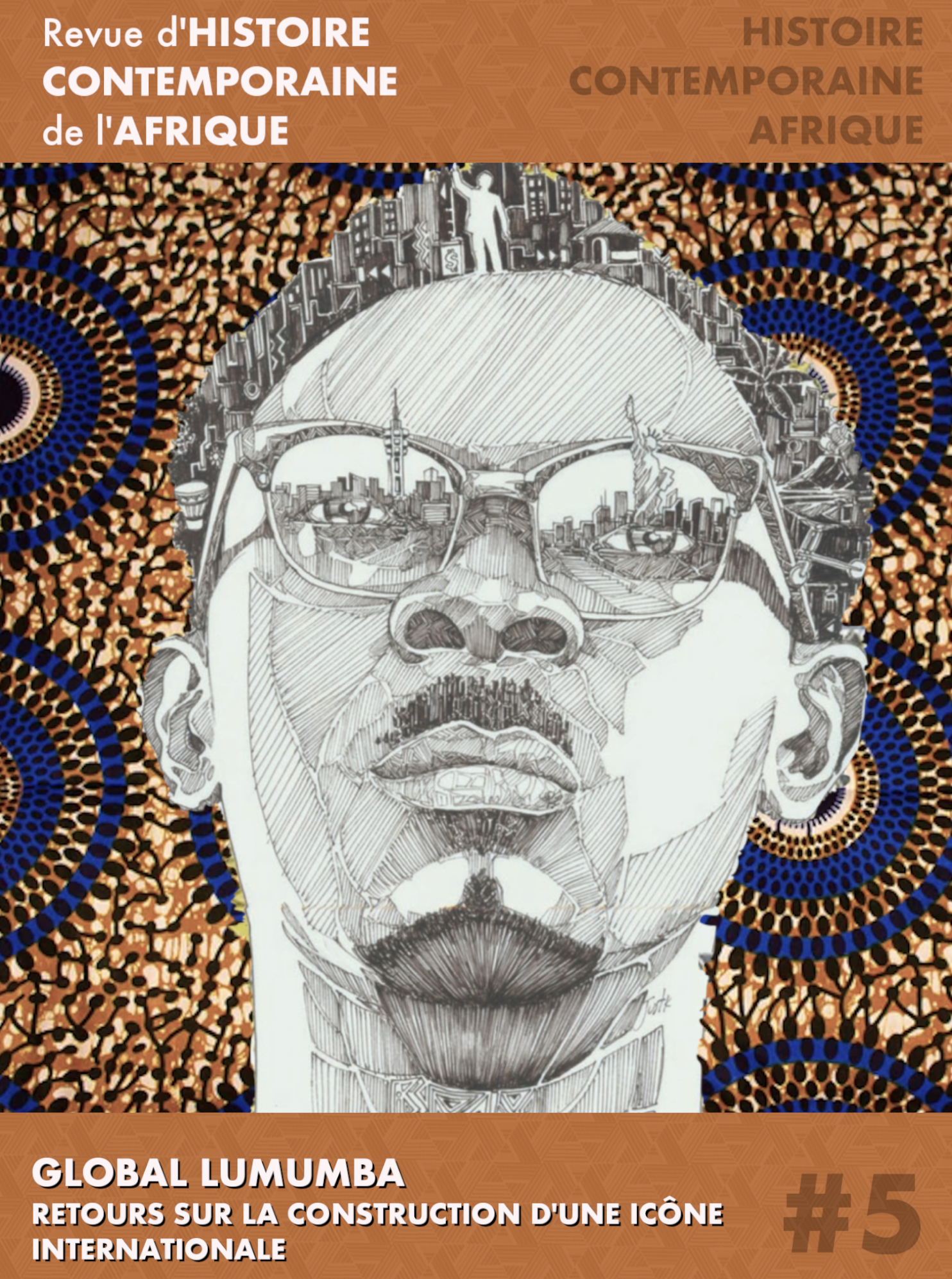
Global Lumumba. Looking back at the construction of an international icon
No. 5 (2023)Special issue edited by Élisabeth Dikizeko (Imaf, Paris) and Karine Ramondy (Sirice, Paris).
Editorial coordination within RHCA by Romain Tiquet.
This new issue of RHCA is not intended as a biography of Patrice Lumumba (1925-1961), the first Prime Minister of the Republic of Congo. Indeed, this issue seeks less to draw up a historiographical account of the rise and fall of the Congolese leader, or of the Congolese crisis (1960-1965), than to understand the genealogy of a global phenomenon based on the "Lumumba" object of study. As such, this dossier seeks to grasp the scope and significance of Lumumba's name around the world through a variety of materials, in order to understand the mechanisms of the international construction of an African political figure, known worldwide not least because of his assassination.
-
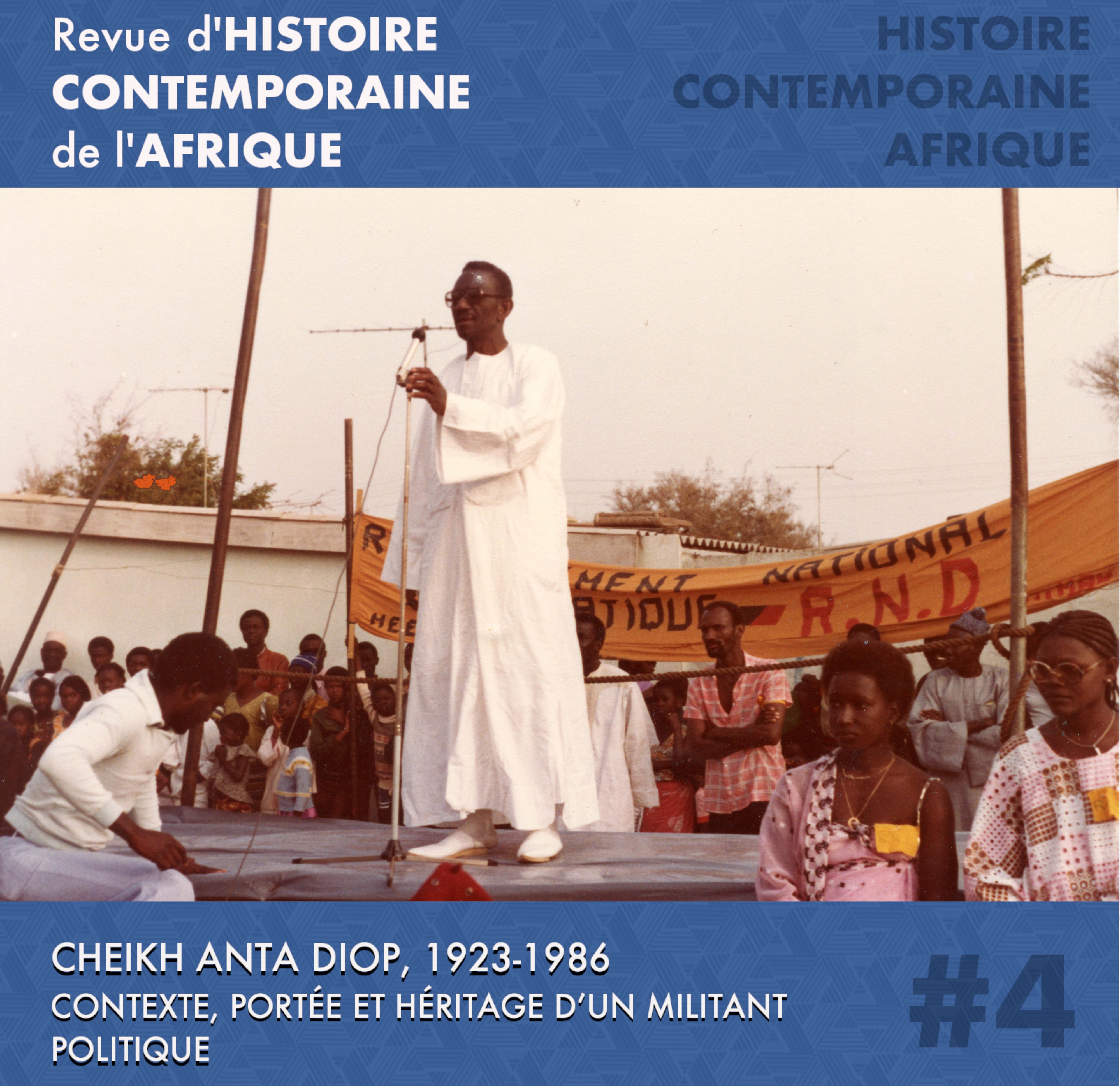
Cheikh Anta Diop, 1923-1986. Context, scope and legacy of a political activist
No. 4 (2023)Special issue edited by Amzat Boukari-Yabara (École politique africaine) and Martin Mourre (IMAf-EHESS).
Editorial coordination within RHCA by Louise Barré and Camille Evrard.
This issue of the Revue d'histoire contemporaine de l'Afrique focuses on the thought and political action of Cheikh Anta Diop. Diop is best known for his scientific work, begun in the late 1940s, in which he explored the origins of human civilisations, their genealogies and reciprocal influences, using the African continent as a starting point. He demonstrated both the "negro" character, in the vocabulary of the time, of ancient Egypt and the cultural unity of the peoples of sub-Saharan Africa from prehistoric times to the emergence of the "empires" of the Middle Ages. In so doing, his work also denounces what he calls the "modern falsification of history", which he considers to be the work of most Western Egyptologists. Cheikh Anta Diop was also a leading pan-Africanist, advocating the creation of a federal state for Africa at the time of decolonisation. Politically, he produced a great deal of theoretical work, while also organising political struggles, mainly in France and Senegal.
This issue is dedicated to Pathé Diagne (1934-2023), a man of science and culture and a comrade in struggle with Cheikh Anta Diop.
-
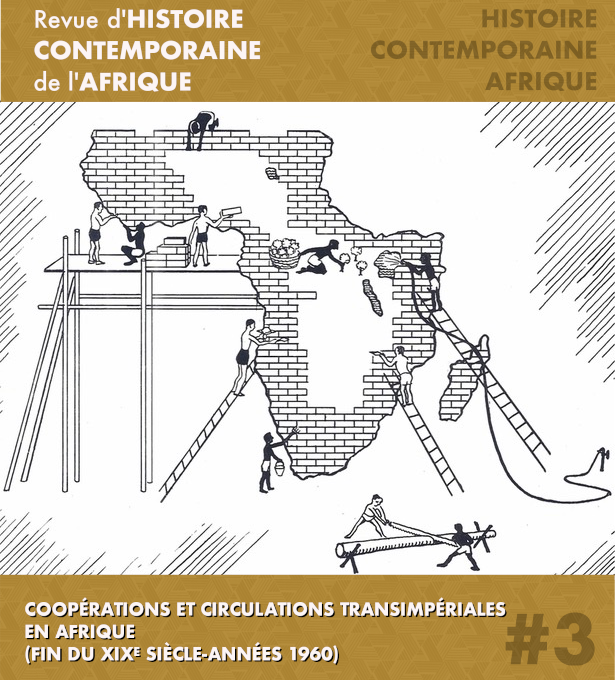
Double Issue. Cooperations and Transimperial Circulations in Africa (end of the 19th century - 1960s)
No. 3 (2022)Double special issue edited by Damiano Matasci (Université de Genève) and Miguel Bandeira Jerónimo (Université de Coimbra).
Editorial coordination within RHCA by Céline Labrune-Badiane and Martin Mourre.
The first part of this double issue of the Revue d’Histoire Contemporaine de l’Afrique explores the wide range of connections, transfers and exchanges that spanned the borders of colonial empires between the end of the 19th century and the 1960s. More specifically, its aim is to contribute to decentering the history of Africa by placing the study of mobility at the heart of the reflection. Based on a variety of case studies embracing the whole continent, the contributions unveil little-known or understudied colonial circuits, as well as the dynamics of cooperation and competition between a wide range of international, imperial, colonial, and African actors. They also highlight connections with other regions of the world and provide original perspectives for understanding the complex transactions that shaped, and were shaped by, the trajectories towards political emancipation. Taken as a whole, the articles ultimately demonstrate the heuristic potential of trans-imperial history and pave the way for new research.
-
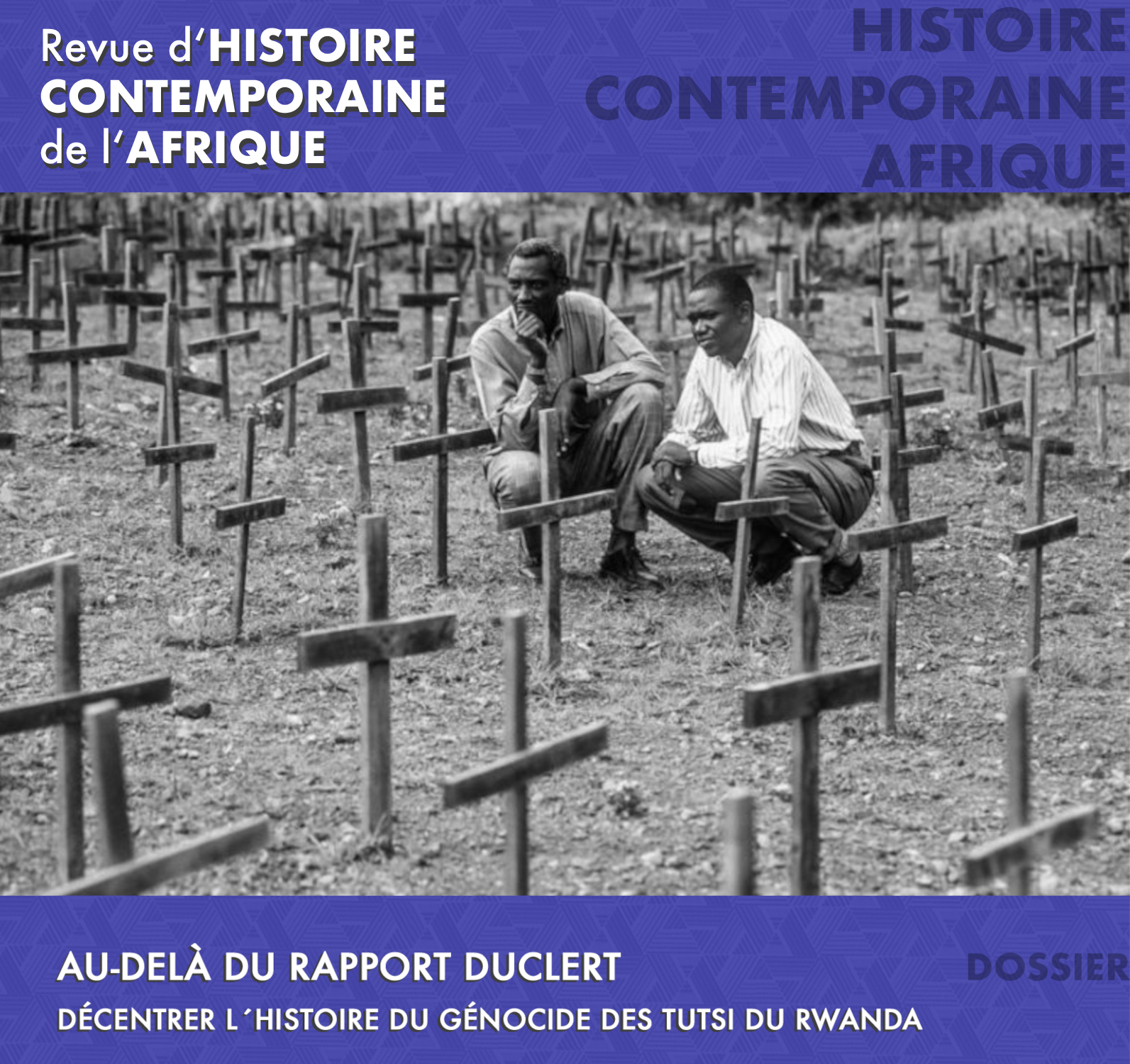
Special Issue. Beyond the "Rapport Duclert". Decentering the history of the genocide of the Tutsi in Rwanda
2021Special issue edited within the journal by Camille Evrard, Muriel Gomez-Perez, Martin Mourre, Florent Piton, Nathaniel Powell and Romain Tiquet.
This special issue is structured around a series of reactions to the Rapport Duclert, most of which deal with aspects beyond France, the Commission's methodology and conclusions.
The joint editorial with Sources. Matériaux & Terrains en études africaines can be found here. The following articles was published by Sources as part of our collaboration: "Écrire l’histoire du génocide des Tutsi au Rwanda à partir de sources locales. Entretien avec Paul Rutayisire, Charles Kabwete Mulinda et Philibert Gakwenzire"
-
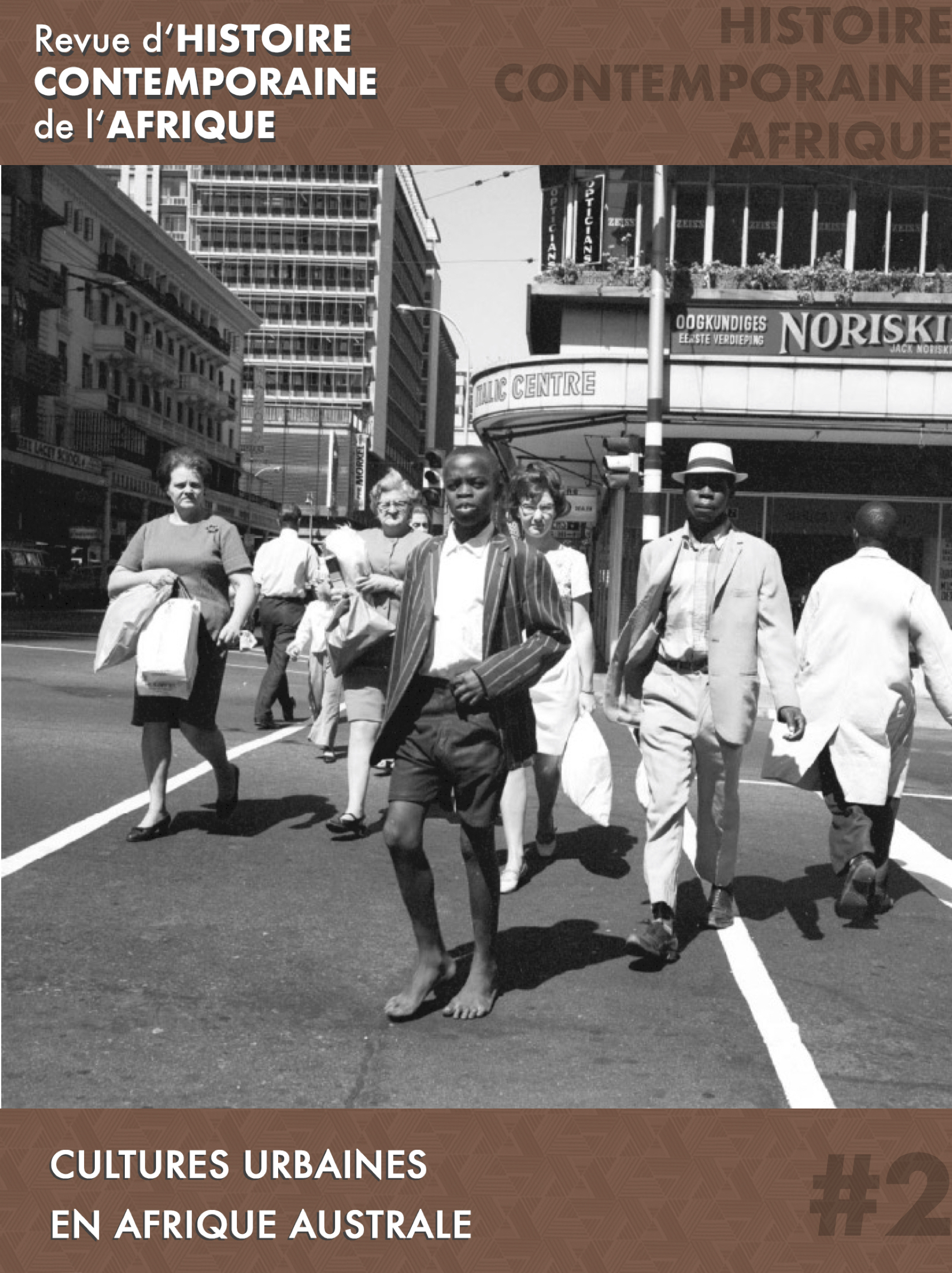
Urban cultures in southern Africa
No. 2 (2021)Special issue edited by Sophie Dulucq (IFAS Research/FRAMESPA), Noor Nieftagodien (Witwatersrand University) and Mathieu Rey (IFPO/IFAS Research).
Editorial coordination within RHCA by Camille Evrard and Alexander Keese.
This special issue aims to address the cultural history of urban societies in contemporary Southern Africa. Between repulsion and attraction, domination and resistance, invention and accommodation, this history has been shaped by encounters between African populations and European settlers, by diasporic communities in the colonial and post-colonial periods and by migrants of all origins. This issue highlights the multiple links between places, specific scenes and the cultural forms that have developed there.
-
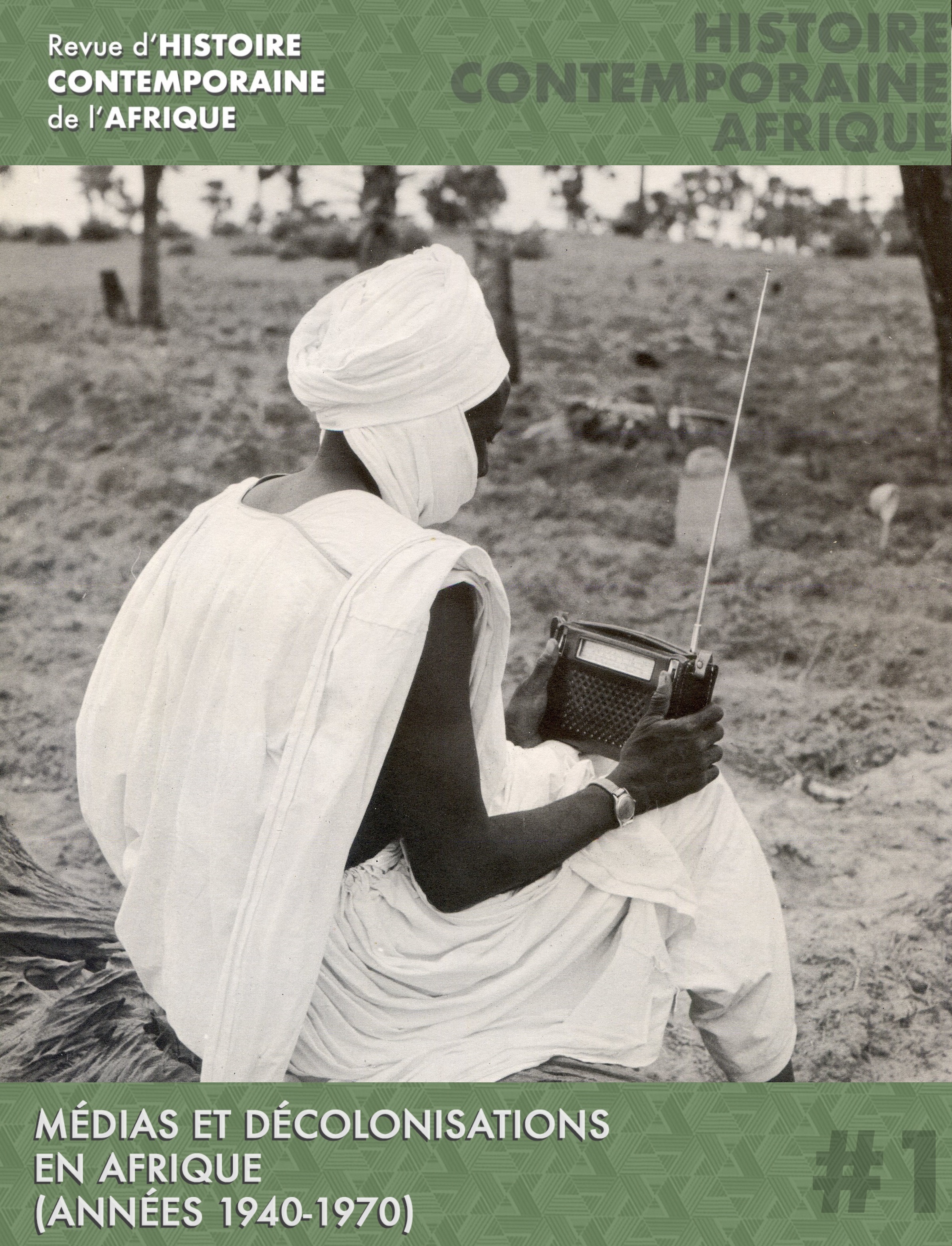
Media and Decolonisation in Francophone Africa (1940s-1970s)
No. 1 (2021)Special issue edited by Gabrielle Chomentowski (CHS/CNRS) and Thomas Leyris (IHRiS/Lille).
Editorial coordination within RHCA by Romain Tiquet.
This thematic issue of the Revue d'Histoire Contemporaine de l'Afrique is devoted to media (press, cinema, radio, television) in French-speaking African countries during late colonialism and up to the first decades after independence. Using different national cases (Belgian Congo, Senegal, Togo, Upper Volta, Côte d'Ivoire, among others), and based on interviews and unpublished archives, the authors look back at the formation, career and role of different actors from these media (journalists, development workers, missionaries, film distributors, etc.). They analyse the content (written and audiovisual) and its reception; and they question the breaks and continuities that spanned the political divide of independence in the development of these media. In each of these seven articles, media study—considered here as an object and not just as a source for historians—reveals the need to vary scales, from the local to the global, and through the imperial, in order to contribute to the cultural history of these African countries.
To read the journal's editorial policy laid out by the editorial board, click here.